Things to Do in Mauritania in April
April weather, activities, events & insider tips
Low Season · Budget Friendly
April Weather in Mauritania
Long-run averages for April in Nouakchott
90°F (32°C)
High Temp
68°F (20°C)
Low Temp
0.0 inches (0 mm)
Rainfall
47%
Humidity
11
Sunny-Day UV
⚠ Extreme UV exposure hits Nouakchott's measured peak index of 11. Unprotected skin burns in under fifteen minutes. The desert interior intensifies this. Reflection off sand increases the damage. Long sleeves are essential. A cheche or wide-brimmed hat is essential. Frequent sunscreen reapplication is essential. All times outdoors demand this.
⚠ Sandstorms and dust haze can strike in April. Wind patterns shift ahead of the hot season. Visibility drops sharply with little warning in open desert. Fine sand penetrates sealed bags. It penetrates camera bodies. It penetrates zipped pockets. Carry eye protection. Keep electronics in hard-sided, sealed cases.
⚠ Dehydration risk runs high. First-time visitors consistently underestimate it. Dry heat and constant wind strip moisture without heavy sweating. Heavy sweating normally signals water loss. Symptoms of serious dehydration include confusion and dizziness. These develop before you feel notably thirsty. Physical exertion on desert terrain accelerates this danger.
Is April Right for You?
Weigh the advantages and considerations before booking
Advantages
- + April sits in the narrow gap between Mauritania's cool season and the brutal summer that follows. Nouakchott hits 32°C (90°F) on average, still manageable for desert trips if you start before dawn and seek shelter by noon. The Adrar Plateau and Chinguetti sit higher, where temperatures drop several degrees. No rain falls in April. That means reliable conditions for overland travel across terrain that summer storms render impassable.
- + Migratory birds still crowd Banc d'Arguin National Park in April. This is one of Earth's most significant shorebird habitats. Flamingos, white pelicans, and enormous wader congregations cover the tidal flats where Sahara meets Atlantic. The European-bound spring migration empties the mudflats soon after. By May, the spectacle thins considerably.
- + Mauritania sees fewer tourists in a full year than most destinations get in a weekend. In April you will likely stand alone as the foreigner at Chinguetti's medieval manuscript libraries. You will swim alone at Terjit's spring-fed pools. You will be the only passenger on the iron ore train who boarded by choice. This is not hyperbole. Tourism infrastructure here operates at a scale measured in dozens, not thousands.
- + Accommodation and guide rates hold steady at baseline in April. The modest premium of November through February, when a few organized tour groups visit, has not yet arrived. Booking flexibility peaks now. Experienced local guides have more availability for custom itineraries than during the narrow peak window.
Considerations
- − The heat demands respect by April. Nouakchott's 32°C (90°F) average high carries Saharan sun at UV index 11. Interior desert temperatures push past 38°C (100°F) by early afternoon. Front-load every outdoor activity into morning hours. Midday becomes mandatory rest. Travelers who struggle in dry heat will find April tougher than expected.
- − Mauritania's tourism infrastructure ranks among the thinnest of any country open to visitors. Outside Nouakchott, accommodation is scarce. Medical facilities are basic at best. Roads crumble quickly beyond paved routes. Self-guided desert travel without an experienced local guide and properly equipped 4x4 is not adventurous. It is dangerous. Improvisation fails here.
- − Mauritania is an Islamic republic. Alcohol is officially prohibited. Nightlife in any conventional sense does not exist. Cultural norms around dress, gender interaction, and public behavior remain conservative. Beach resort infrastructure does not line the Atlantic coast. Evening entertainment does not exist. The country rewards patience, curiosity, and comfort with solitude. It demands adjustment in return.
Best Activities in April
Top things to do during your visit
Adrar Plateau and Chinguetti Desert Expedition
Chinguetti perches on the edge of the Erg Ouarane sand sea at roughly 450 m (1,476 ft). April mornings hover near 22°C (72°F) before the desert floor radiates heat upward. The town is half-buried in sand that creeps through doorways and drifts against honey-colored stone walls. The silence in narrow alleys hums in your ears. Four or five private manuscript libraries hide in ordinary family compounds. They hold Qurans and astronomical texts from the 13th century. Goatskin pages carry ink that survived seven hundred years of Saharan dust and wind. Your guide arranges tea with family guardians. You sit on carpet-covered sand drinking three rounds of increasingly sweet mint tea while pages predating the printing press turn under bare hands. The drive from Atar crosses the Amogjar Pass. Black volcanic rock yields to orange dunes with a sharpness like crossing between planets. April keeps desert tracks navigable. July flash floods from distant storms can cut roads for days.
Booking Tip: Multi-day Adrar expeditions require a licensed local guide and properly equipped 4x4. Book three to four weeks ahead through operators specializing in Saharan overland travel. Most expeditions depart from Atar. See current options in the booking section below for vetted multi-day packages.
Banc d'Arguin National Park Coastal Birding
Banc d'Arguin stretches 180 km (112 miles) along Mauritania's Atlantic coast where Sahara drops directly into ocean. It holds the world's largest concentration of wintering Palearctic shorebirds. April flocks thin as spring migration pulls species northward. Hundreds of thousands of waders remain. Greater flamingos linger well into the month. Their pink smudge shows against grey-brown mudflats long before you reach the water's edge. Imraguen fishing villages inside the park operate on rhythms unchanged for centuries. Wooden sailing boats called lanches work shallows for yellow mullet. Fishermen slap water to summon bottlenose dolphins that drive fish into nets. This practice exists nowhere else. April's calm seas and light winds make boat access to outer islands reliable. The smell of tidal flats at low tide is strong, briny, unmistakable. The sound is constant wings and calls, building to a roar when raptors spook roosting flocks skyward. Getting here requires a full day's drive south from Nouadhibou on tracks demanding a guide who knows the tidal crossings.
Booking Tip: Access to Banc d'Arguin requires a park permit and a guide familiar with tidal routes. This is typically arranged as part of a multi-day tour from Nouadhibou. Book through operators running dedicated natural history itineraries and confirm park fees and boat transfers to Imraguen villages are included. Check the booking section below for current availability.
Nouakchott Cultural and Market Immersion
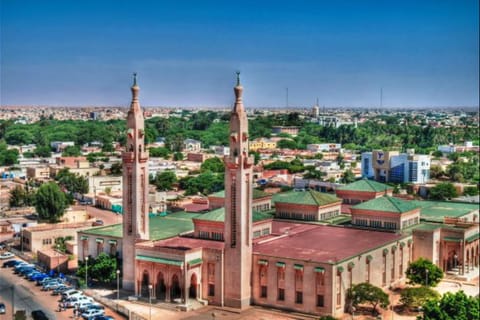
Nouakchott was never meant to be a city. When Mauritania chose it as capital in 1958, it was a fishing camp of a few hundred people on sand that shifts with the wind. Today it holds a quarter of the country's population, and the sand still wins: it drifts against concrete walls, covers car parks overnight, and gives the whole city a monochrome palette of tan and cream that Atlantic haze softens further. The Port de Peche, the fishing port on the southern fringe, comes alive before dawn when hundreds of painted pirogues ride the surf in with the night's catch, and the beach becomes an open-air market where fish are gutted, sorted, and hauled onto trucks in a scene that smells powerfully of salt, diesel, and the sea. By mid-morning the Marche Capitale fills with the scent of roasting peanuts and the sharp green bite of fresh mint being bundled for tea. This is where you eat Mauritania's national dish, thieboudienne: a mound of broken rice slow-cooked with a whole fish, tomato concentrate, and bitter eggplant, served on a communal platter that everyone eats from with the right hand. Nouakchott's April humidity of 47% keeps the dust down compared to the bone-dry winter months, though the warmth means the market thins out by early afternoon.
Booking Tip: Half-day and full-day guided tours of Nouakchott are available with pickup from central accommodation. Book through licensed operators at least a week ahead. A guide who speaks both Hassaniya Arabic and French or English transforms the experience, at the Port de Peche where the action starts before sunrise. See current capital city tour options in the booking section below.
Terjit Oasis Canyon and Natural Springs
Terjit appears without warning. You drive for hours through flat, featureless hammada, the black rock desert of the Adrar region, and then the ground splits open and a narrow canyon drops away into a corridor of date palms, green rushes, and the sound of running water. The contrast is almost violent: above, the air is dry and shimmering at 35°C (95°F), and inside the canyon the temperature falls by ten degrees, the shade from overhanging rock walls cool enough to raise goosebumps on sunburned skin. Natural springs feed pools of clear, slightly mineral-tasting water deep enough to swim in, and the wet stone underfoot is slippery and smooth from centuries of flow. In April the springs are running strong from the last of the winter recharge, and you are unlikely to share the canyon with more than a handful of other visitors. The drive from Atar takes roughly ninety minutes on a track that a standard 4x4 can handle in the dry season, though the final descent is steep enough to need low-range gearing. Bring everything you need: there are no facilities, no vendors, and no shade outside the canyon itself.
Booking Tip: Terjit is most practically visited as a day excursion from Atar or as a stop on a longer Adrar Plateau itinerary. Any operator running Chinguetti expeditions will include Terjit on request. Confirm vehicle capability for the canyon descent and bring your own water and food. See multi-day Mauritania tour options in the booking section below.
Iron Ore Train Ride Through the Sahara
The iron ore train running from the mines at Zouerat to the port at Nouadhibou is one of the longest trains on Earth, stretching over 2 km (1.2 miles) and hauling thousands of tonnes of ore through 700 km (435 miles) of open Sahara. Riding it is not comfortable and it is not scenic in any conventional sense. But it is one of those experiences that rearranges your understanding of what travel can be. Most travelers board at Choum or Nouadhibou and ride in one of the open ore cars, sitting on the crushed iron ore itself, which coats everything it touches in fine red-black dust: your clothes, your face, the inside of your camera bag. The ride takes twelve to eighteen hours depending on delays, and after dark the Saharan sky opens up above the railcar walls with a clarity that city dwellers have simply never seen, the Milky Way so dense it casts a faint shadow. The iron dust smell is metallic and dry, the cold after sunset drops toward 18°C (64°F) in the open car, and the rhythmic clatter of wheels on rail joints becomes the only sound for hours at a stretch. April's dry conditions mean fewer delays from sand drifting onto the tracks than the windier winter months, though schedules remain approximate at best. A passenger car exists and runs intermittently. But the ore cars are the experience.
Booking Tip: The iron ore train has no formal booking system for casual passengers. Experienced local guides arrange boarding at Choum or Nouadhibou and bring the supplies you need: water, food, a sleeping bag, a headlamp, and something to cover your face against the ore dust. This is best arranged as part of a longer guided itinerary. See Nouadhibou-based tour options in the booking section below.
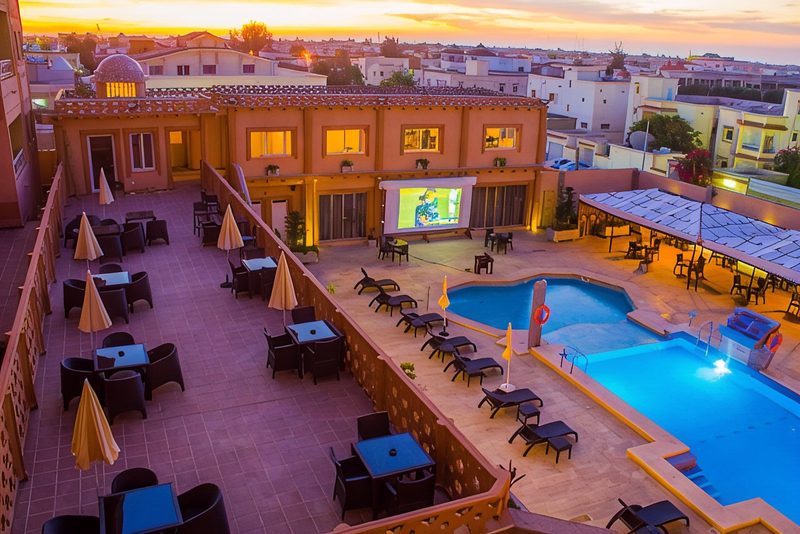
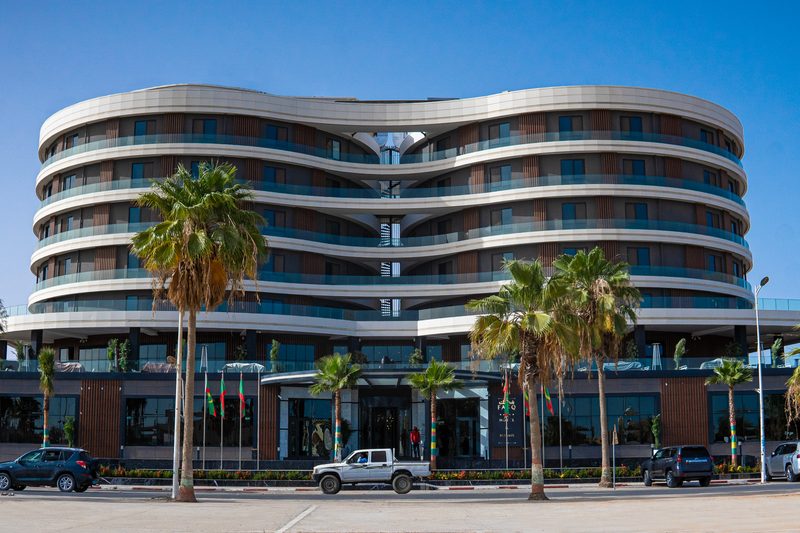
Where to Stay in Mauritania in April
Hand-picked hotels across price tiers for April travellers.
Packing Checklist
Bookmark this page — your progress is saved between visits
Need the full list with shopping links?
Climate-specific gear, brand recommendations, and what to leave at home.
View Mauritania Packing List →Essential Tips
Insider knowledge and common pitfalls to avoid
Insider Knowledge
Mauritania's safety profile is more subtle than blanket travel advisories suggest. Nouakchott, the Adrar Plateau, Chinguetti, Terjit, and the Atlantic coast are regularly traveled by the small number of tourists who visit, and with a reputable local guide and basic precautions these established corridors are manageable. The eastern and far northern border regions near Mali and Algeria are a different matter entirely and are effectively off-limits. Check your government's current advisory before booking. But do not let warnings about the border zones deter you from the tourist routes that local operators know well.
Mauritanian food is built around communal eating, and thieboudienne, the national dish of broken rice with fish, tomato, and vegetables, arrives on a single large platter the entire table shares. Eat with your right hand only, take from the section directly in front of you, and wait for the host to push choice pieces of fish your way. The flavors are bold and smoky from the cooking fire, sharpened by guedj, a dried fermented fish concentrate with a pungent kick that catches foreigners off guard the first time. Refusing a meal or eating only a token amount reads as coldness. Mint tea, brewed thick and sweet through three rounds of increasing sweetness, is offered at every human interaction, and declining it is a minor social offense.
The country's accommodation landscape is thin but workable. Nouakchott has a small number of adequate mid-range options and one or two that approach international standard. But outside the capital you are looking at basic auberges, desert camps arranged by your tour operator, or sleeping on the ground under the stars. This is the norm, not a failure of planning. Booking through your guide or tour operator for anything outside Nouakchott is significantly more reliable than trying to reserve independently online, where listings are often outdated or nonexistent.
Mauritania's Atlantic coastline runs for hundreds of kilometres but bears no resemblance to the beach resort infrastructure that search term might imply. The beaches around Nouakchott are working fishing beaches, sandy and vast but mostly unswimmable due to strong currents, undertow, and the debris of a working port. The coast near Banc d'Arguin is ecologically spectacular but entirely undeveloped. Come for the raw, wind-scoured drama of the Sahara meeting the ocean, a landscape of enormous lonely beauty. But leave the beach towel at home.
Avoid These Mistakes
Underestimating water needs is the single most common and most dangerous mistake. The combination of Nouakchott's measured 32°C (90°F) heat, constant dry wind, and physical activity in sand or on rock means your body loses water faster than you feel thirsty. A minimum of four to five litres per day is realistic during desert excursions, and running short in the Sahara is not an inconvenience, it is a medical emergency. Carry your own supply and do not rely on finding refills en route.
Attempting to self-drive in the desert without a local guide and a proper vehicle. The tracks outside paved roads are unmarked, shift with wind-blown sand, and cross terrain where a breakdown means waiting in extreme heat for rescue that may be hours or days away. This is not adventurous independence. It is the single most dangerous decision a tourist can make in Mauritania. Even experienced overland travelers hire local guides here, and they are right to do so.
Mauritania does not run on your schedule. Bus departures, train arrivals, shop hours, and appointment times are approximate in ways that will frustrate travelers who expect precision. The iron ore train might leave three hours late. It might arrive five hours behind schedule. Markets open when vendors show up. Guides adjust daily plans based on heat, sand conditions, or tea conversations that stretch longer than expected. Build slack into every plan. Treat delays as texture, not failure. This mindset determines whether you enjoy the country or spend your trip fighting it.
Ready to plan your trip to Mauritania?
Now that you've got the research covered, here's where to go next.
Book Experiences in Mauritania
Top-rated things to do in Mauritania this April
Explore More Activities in Mauritania
Didn't see anything interesting yet?
Browse Viator's full catalog of tours, day trips, food experiences, and private guides in Mauritania.
See All Mauritania Tours on Viator