Things to Do in Mauritania in October
October weather, activities, events & insider tips
Low Season · Budget Friendly
October Weather in Mauritania
Long-run averages for October in Nouakchott
97°F (36°C)
High Temp
77°F (25°C)
Low Temp
0.1 inches (3 mm)
Rainfall
46%
Humidity
9
Sunny-Day UV
⚠ Daytime heat hits extreme levels. Nouakchott averages 36°C (97°F). Interior desert areas run hotter. Heatstroke threatens travelers unaccustomed to Saharan conditions. The danger peaks between 10 AM and 4 PM. Schedule outdoor excursions for early morning or late afternoon only.
⚠ Sandstorms strike without warning. Seasonal wind patterns shift toward dry season northeast trades. Visibility drops to near zero. Desert vehicle travel stops. Flights delay. Carry face coverings. Build flexible itinerary buffers. These precautions are mandatory, not optional.
⚠ Malaria risk stays elevated through October. The Senegal River valley in the south poses particular danger. Coastal wetlands and oases also threaten. Antimalarial prophylaxis is strongly recommended for all travelers. Apply DEET-based repellent from dusk onward. Mosquito activity peaks then.
Is October Right for You?
Weigh the advantages and considerations before booking
Advantages
- + Humidity drops sharply from the wet season's suffocating 76-77% to a far more manageable 46%, and rainfall effectively stops. After months of summer moisture, October marks the return of reliably dry skies and clear desert visibility across the Adrar Plateau and the Saharan interior.
- + The first waves of Palearctic migratory birds arrive at Banc d'Arguin National Park in October. They fill the UNESCO-protected mudflats with flamingos, pelicans, and broad-billed sandpipers before the peak-season birding groups show up in November and December.
- + The desert still carries traces of green from the July-September rains. This is an ephemeral window when the Sahara's edges have scrub grass and the occasional wildflower, making the landscape more photogenic and varied than the bone-dry dunes of deep winter.
- + Tourist numbers are at their lowest of any accessible month. The November-February season hasn't started, so Chinguetti's medieval libraries, Terjit's oasis pools, and Banc d'Arguin's coastline are yours in genuine solitude that even shoulder-season Morocco can't match.
Considerations
- − October registers Nouakchott's highest average daytime high of the year at 36°C (97°F), and interior desert temperatures can climb higher still. Any outdoor activity between roughly 10 AM and 4 PM requires serious heat management, and air conditioning outside the capital's better establishments is essentially nonexistent.
- − Tourism infrastructure operates at minimal pre-season capacity. Some guesthouses in Atar and Chinguetti haven't reopened for the season, 4x4 departures for desert excursions run less frequently, and available English-speaking guides are scarce. Booking three to four weeks ahead is closer to mandatory than advisable.
- − Security advisories remain in effect for areas near the Mali border and parts of the eastern desert. The main tourist corridor linking Nouakchott, Atar, Chinguetti, Banc d'Arguin, and Nouadhibou is generally considered safe with registered guides. But independent overland travel outside this corridor is strongly discouraged by most foreign ministries.
Best Activities in October
Top things to do during your visit
Adrar Plateau and Ancient Desert Town Expeditions
October on the Adrar Plateau is, to be fair, not the obvious choice. That is precisely what makes it interesting. The plateau sits at roughly 500 m (1,640 ft), which tends to shave a few degrees off Nouakchott's punishing 36°C (97°F) highs, and by late afternoon the sandstone escarpments along the road from Atar to Chinguetti turn a deep amber that photographs don't quite capture. Chinguetti itself, a UNESCO-listed caravan town half-swallowed by advancing dunes, still holds manuscript libraries where families have guarded hand-copied Qurans and astronomical treatises for centuries. The dry leather smell of those rooms, the crackle of nine-hundred-year-old pages, the silence broken only by wind against the stone walls: it's the kind of experience that reminds you why you came to Mauritania in the first place. October's advantage is solitude. Peak season brings modest but noticeable tour groups to these libraries. Right now, you might be the only visitor all day. The trade-off is heat. Plan any walking for before 9 AM or after 4 PM, and carry at least 3 liters (about 0.8 gallons) of water per person per half-day excursion. The desert around Chinguetti still carries traces of green from the recent rains, and the dunes have a firmer crust that makes 4x4 travel somewhat easier than deep-winter sand.
Booking Tip: Multi-day Adrar circuits typically run four to eight days and require a licensed guide with a properly equipped 4x4. Book at least three to four weeks ahead, as October is pre-season and operator availability is limited. Look for operators with satellite communication equipment and verified desert rescue protocols. See current tour options in the booking section below.
Banc d'Arguin Coastal Bird Watching
Banc d'Arguin is likely the single strongest reason to visit Mauritania in October specifically. This UNESCO-protected stretch of coast and shallow sea between Nouakchott and Nouadhibou sits where the Sahara meets the Atlantic, and October marks the arrival of the first major waves of migratory birds. Flamingos lift off tidal flats in pink clouds, white pelicans drift in formation, terns dive into water so shallow it barely reaches your ankles at low tide. The park hosts over two million wintering waterbirds each year, and catching the early arrivals means fewer birding groups and quieter observation points than the peak months that follow. The landscape itself is stark and hypnotic: bleached sand giving way to mudflats that shimmer with heat haze, the rush of thousands of wings lifting at once, the salt-and-seaweed smell of the shallows as the tide pulls back. Access is typically by 4x4 from Nouakchott, roughly 180 km (112 miles) to the southern entry, and you'll want a guide who knows the tidal patterns. The mud can strand vehicles when the water returns. Imraguen fishing communities within the park still use traditional sailing methods, and watching the fishermen work their nets at dawn, silhouetted against a flat Atlantic horizon, is one of those slow, quiet moments that stays with you long after you leave Mauritania.
Booking Tip: Banc d'Arguin visits are usually incorporated into multi-day tours that combine the park with Nouadhibou or the Adrar circuit. Independent access requires a park permit and a guide with tidal knowledge. The mud flats are dangerous for unaccompanied vehicles. Book at least three weeks ahead and confirm your operator has the current park entry authorization. Check current availability in the booking section below.
Nouakchott Port de Peche and Capital Discovery
Nouakchott is not, by any conventional measure, a pretty capital. It sprawled from a few thousand residents in 1960 to well over a million today, and most of it is flat, sun-blasted, and built in grey concrete. But it has a pulse you won't find in the desert, and the Port de Peche is where it beats loudest. Every afternoon, hundreds of painted pirogues, long wooden fishing boats in yellows, blues, and greens, ride the surf back to shore, and the beach erupts into organized chaos as crews drag the catch up the sand by hand. The smell is overwhelming and layered: raw fish, diesel smoke, salt spray, the char from women grilling the day's smaller catch over charcoal pits right there on the beach. In October, the haul tends to be solid as the coastal waters have begun cooling slightly, and the late-afternoon light turns the whole scene golden and chaotic in a way that looks almost staged but isn't. The Marche Capitale sprawls for blocks through the city center and sells everything from printed fabric bolts to camel-milk soap, and the mint tea served at small stalls along its edges, brewed strong, poured from height to build a copper-colored froth, sweet enough to make your teeth ache, is Mauritania's universal social currency. Evening in Nouakchott is tea and conversation, not bars: alcohol is prohibited, and social life revolves around shared meals and the three-glass tea ritual that can stretch an hour if the company is right.
Booking Tip: Half-day and full-day Nouakchott walking tours are available through licensed local operators and provide context that solo wandering misses. This matters most at the Port de Peche, where a guide who knows the fishermen can get you closer to the action than a camera-toting stranger ever will. Book a few days ahead and request a late-afternoon start to catch the pirogue landings. See current options in the booking section below.
Nouadhibou Peninsula and Ship Cemetery Coast
Nouadhibou sits on the Cap Blanc peninsula with the Atlantic on both sides, and it has an atmosphere that's hard to pin down. Part working port, part northern desert gateway, part end-of-the-road outpost where Mauritania's iron ore train arrives coated in red Saharan dust. The ship cemetery south of town is the draw that gets mentioned first: dozens of rusting hulks beached in shallow turquoise water, some listing at angles that seem to defy gravity, their hulls groaning and creaking with the tide. At low water you can walk among them while crabs scatter across the exposed sand and the salt wind carries the metallic tang of oxidizing steel. It's eerie and photogenic in equal measure. October is a reasonable time for the peninsula. The ocean moderates temperatures noticeably compared to the interior, and a persistent Atlantic breeze provides relief that Nouakchott rarely offers. The Cap Blanc seal colony, one of the last populations of Mediterranean monk seals on earth, sits at the peninsula's tip, and October falls within the window when the seals are typically hauled out on the rocky beaches, though access is restricted to protect them. Nouadhibou also happens to be where Mauritania's legendary iron ore train terminates. At roughly 2.5 km (1.6 miles) long, it is one of the longest trains on the planet, and watching it pull in, red dust billowing from hundreds of open ore wagons, is the kind of industrial spectacle that feels like it belongs to another century.
Booking Tip: Nouadhibou walking and coastal tours typically run as a full day and combine the ship cemetery, the port area, and (when access is available) the seal colony viewpoint. Some operators offer the experience as part of a larger Mauritania circuit that includes Banc d'Arguin. Book at least two weeks ahead and confirm whether seal colony access is currently open. Check the booking section below for available tours.
Saharan Oasis and Canyon Circuit from Atar
The oases around Atar, and Terjit in particular, are the closest thing Mauritania has to a mirage made real. The road from Atar drops through a narrow canyon where the rock walls close in, and then suddenly there are palm trees, pooling spring water, and the temperature seems to fall by 5°C (9°F) in the shade of the gorge. Terjit's natural spring pools are warm and faintly mineral, surrounded by date palms and smooth rock worn by centuries of flowing water, and the sound of running water after hours of desert silence hits you with something close to physical force. October, with its extreme heat, makes the oasis experience more intense than it would be in the cooler months. You feel the contrast viscerally, the way shade and water recalibrate your entire body after a morning of 36°C (97°F) desert. The Adrar region around Atar also holds some of Mauritania's most dramatic canyon country, with rock art sites thousands of years old visible on the walls of narrow sandstone gorges: stick figures, cattle, giraffes from a time when the Sahara was green savannah. Any oasis circuit from Atar should be done with a registered local guide and a properly equipped 4x4. Terjit is only roughly 40 km (25 miles) from Atar, but the terrain is rocky and the tracks are not always obvious. The palm shade at Terjit, the smell of wet stone and date flowers, the absolute quiet broken only by water and wind, it's the antidote to everything the desert just put you through.
Booking Tip: Day trips from Atar to Terjit and the surrounding canyon sites are the most accessible desert excursion in Mauritania and don't require the multi-day commitment of the full Adrar circuit. Book through licensed operators in Atar or as part of a broader Mauritania tour at least two to three weeks ahead. October availability is limited but improving as the season opens. See current options in the booking section below.
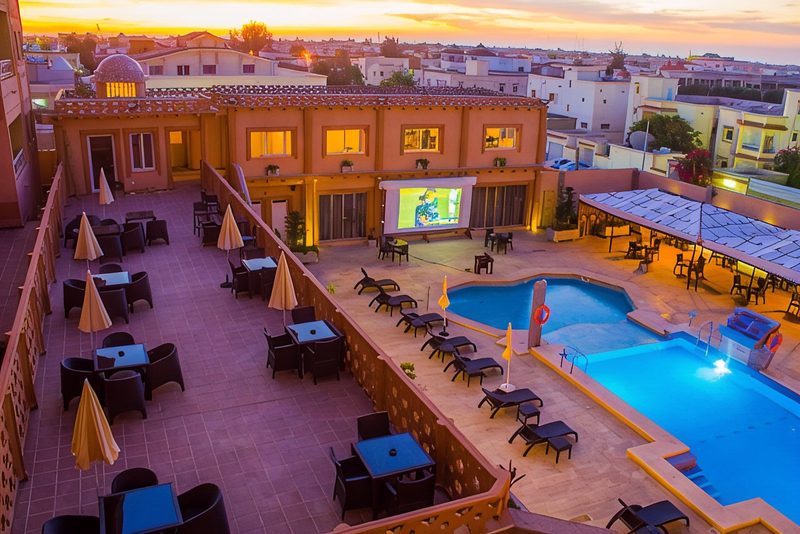
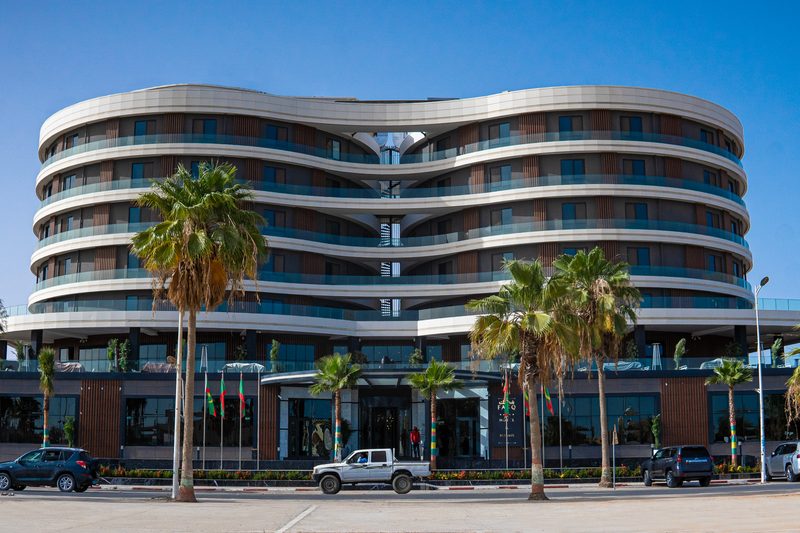
Where to Stay in Mauritania in October
Hand-picked hotels across price tiers for October travellers.
Packing Checklist
Bookmark this page — your progress is saved between visits
Need the full list with shopping links?
Climate-specific gear, brand recommendations, and what to leave at home.
View Mauritania Packing List →Essential Tips
Insider knowledge and common pitfalls to avoid
Insider Knowledge
The mint tea ceremony, called atai, is Mauritania's social backbone. Refusing it is a minor but genuine social offense. You'll be offered three glasses brewed in sequence. The first is intensely bitter. The second is balanced. The third is almost syrupy with sugar. Sit through all three, even when it's 36°C (97°F) and a hot drink seems insane. This signals respect and patience. It's often the thing that transforms a transactional interaction with a guide or host into a real conversation. The whole ritual can stretch an hour. Let it.
Mauritanian food is built on three pillars that shift with geography: fish on the coast, lamb in the interior, and dates everywhere. The national dish, thieboudienne, fish with broken rice and stewed vegetables cooked in a thick tomato base with bitter eggplant and lady's-fingers okra, appears at midday meals across Nouakchott. In the Adrar, mechoui, whole lamb slow-roasted until the fat crisps and the meat slides off the bone, is the celebration dish. Zrig, fermented camel milk thinned with water, is the drink you'll be offered in the desert. It's tangy, slightly sour, oddly refreshing once you stop fighting the unfamiliarity. None of these are restaurant experiences in any formal sense. The best versions come from homes and roadside cookfires.
October sits in an awkward gap where Mauritania is technically accessible but the tourism apparatus hasn't fully restarted. This means fewer available guides, less-frequent vehicle departures from Atar, and the occasional auberge that hasn't reopened for the season. The upside is negotiating power on pricing for multi-day tours that a January visitor would never have. The downside is that what works easily in peak season, showing up in Atar and finding a desert excursion leaving tomorrow, simply doesn't exist yet in October. Arrange everything from Nouakchott or internationally at least three to four weeks ahead.
The iron ore train from Nouadhibou to Choum is one of the longest trains on earth at roughly 2.5 km (1.6 miles). Riding it has become a quiet rite of passage among overlanders. The journey takes somewhere between twelve and eighteen hours through flat, monochrome desert in open-topped ore wagons coated in reddish iron dust. There's no reliable schedule, no amenities, and nowhere to hide from the elements. In October, the daytime hours in an open ore car are brutal. If you attempt it, aim for an overnight departure. Bring more water than you think reasonable. Wrap your face with a cheche against the dust. It's uncomfortable and memorable. That tends to be the pattern with most things in Mauritania.
Avoid These Mistakes
Don't underestimate distances and travel times in a country roughly twice the size of France with almost no paved road outside the Nouakchott-Atar-Chinguetti corridor and the northern route to Nouadhibou. What looks like 200 km (124 miles) on a map can take eight or ten hours by 4x4 across trackless desert. Breakdowns happen in places where the next vehicle might not pass for a day.
Carry enough water for desert excursions. The standard advice is 3 liters (about 0.8 gallons) per person per half-day. In October's 36°C (97°F) heat, experienced desert guides tend to carry double that and consider anything less reckless. Dehydration in the Sahara escalates from discomfort to medical emergency faster than most travelers from temperate climates realize.
Never photograph people without asking first. Mauritanian culture treats personal consent around photography with gravity, for women. Pointing a camera without permission causes genuine offense, not mild annoyance. Ask first. Accept refusal gracefully. Many Mauritanians will pose willingly once you have shown this basic courtesy.
Ready to plan your trip to Mauritania?
Now that you've got the research covered, here's where to go next.
Book Experiences in Mauritania
Top-rated things to do in Mauritania this October
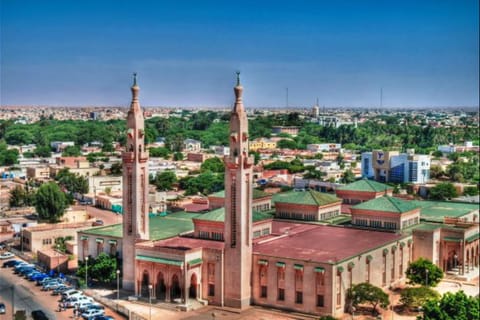
Explore More Activities in Mauritania
Didn't see anything interesting yet?
Browse Viator's full catalog of tours, day trips, food experiences, and private guides in Mauritania.
See All Mauritania Tours on Viator