Things to Do in Mauritania in August
August weather, activities, events & insider tips
Low Season · Budget Friendly
August Weather in Mauritania
Long-run averages for August in Nouakchott
88°F (31°C)
High Temp
78°F (25°C)
Low Temp
1.0 inches (25 mm)
Rainfall
76%
Humidity
11
Sunny-Day UV
⚠ Flash flooding risk in wadis and canyon routes across the Adrar plateau. August rain falls in sudden, heavy bursts that can turn dry riverbeds into fast-moving water channels within minutes. Never camp in a wadi bed, and confirm track conditions with local contacts before driving canyon routes like the approach to Terjit or the Atar-to-Chinguetti piste.
⚠ Heat illness risk compounded by high humidity. Nouakchott's 76% average humidity in August reduces your body's ability to cool through evaporation, making the 31°C (88°F) daytime temperature feel substantially hotter than the number suggests. Limit strenuous outdoor activity to before 9 AM and after 5 PM, hydrate aggressively, and recognize the early signs of heat exhaustion: headache, nausea, and confusion.
⚠ Sandstorms remain possible in the Adrar and along the Nouakchott-Atar road, reducing visibility to near zero with little warning. If driving, pull over and wait rather than pushing through. Protect eyes and electronics with a scarf and sealed bags.
Is August Right for You?
Weigh the advantages and considerations before booking
Advantages
- + The Guetna date harvest turns the Adrar oases into open-air gatherings where Mauritanian families camp under the palms for weeks. August drops you into the heart of it. You will eat dates still warm from the sun. You will drink fresh camel milk offered by strangers. You will witness a communal rhythm that predates the country itself. No tour operator packages this. It is not a performance. It is simply what happens in the palm groves around Atar every summer.
- + Tourist numbers in August hover near zero. At Chinguetti, the medieval library town where Saharan manuscripts have survived for centuries in private family collections, you might be the only foreigner for days. The custodians who unlock those manuscript chests tend to linger longer when there is no queue behind you. The conversations that follow are worth more than anything behind glass in a museum.
- + The brief rains green the Sahel belt south of Nouakchott in ways that seem almost hallucinatory against the usual tawny emptiness. Ephemeral lakes appear near Aioun el Atrouss and Nema. Nomadic herders move their camels and goats toward fresh pasture. The landscape you will photograph in August looks nothing like the Mauritania in any guidebook. Almost nobody with a camera is here to see it.
- + Accommodation rates drop noticeably from the October-to-March peak season. Auberges in the Adrar that fill up with overlanding groups during the cooler months have empty rooms and owners willing to negotiate. The handful of guesthouses in Nouakchott are rarely fully booked. You will likely get more personal attention and flexibility in your itinerary than at any other time of year.
Considerations
- − Nouakchott in August feels like standing inside a warm, damp towel. The 76% humidity combined with 31°C (88°F) afternoons creates a heavy, clinging heat that the dry-season Saharan breeze normally cuts through but now does not. Air conditioning is unreliable outside the capital's better hotels. Even locals slow their pace dramatically between noon and four.
- − Rain in the south, though modest by tropical standards at 25 mm (1.0 inches), falls in concentrated bursts that can turn unpaved desert tracks into temporary rivers. The route from Atar to Chinguetti, already a test for any vehicle, becomes impassable after a downpour, sometimes for a day or more. Itineraries in August need built-in flexibility. Tighter schedules cannot absorb this.
- − Mauritania's already limited tourist infrastructure thins further in August. Some desert camp operators close for the season. A few restaurants in Atar reduce hours. Finding an English-speaking guide on short notice becomes harder. This is emphatically not a destination where you improvise logistics on arrival. In August, advance planning moves from advisable to essential.
Best Activities in August
Top things to do during your visit
The Adrar plateau sits high enough above the coastal plain that August heat, while still present, lacks the suffocating humidity of Nouakchott. Chinguetti, a UNESCO-listed caravan town half-swallowed by sand dunes, holds private libraries where families guard Quranic manuscripts dating to the thirteenth century. The custodians open trunks of goatskin-wrapped texts. They explain lineages of scholarship that stretch back further than most European universities. Ouadane, further east and even quieter, overlooks a cliff edge where the plateau drops into the Sahara. The silence at dusk is total except for wind. August also means the Guetna is in full swing in surrounding oases. An Adrar expedition doubles as cultural immersion that the cooler-month tourist cohort largely misses. Plan for early morning departures. Build in midday rest stops. The light at dawn and late afternoon turns the sandstone escarpments a deep copper. It photographs spectacularly well.
Booking Tip: Book through licensed operators with 4x4 fleets at least three weeks ahead. August availability shrinks with seasonal closures. Confirm that the operator carries satellite communication equipment. Mobile coverage disappears outside Atar. Multi-day itineraries of five to eight days tend to work best for covering both Chinguetti and Ouadane without rushing. See current options in the booking section below.
Banc d'Arguin National Park Coastal Expeditions
Banc d'Arguin, the vast UNESCO-protected stretch of coast between Nouakchott and Nouadhibou, shelters one of the most important bird breeding grounds in West Africa. August falls within the season when resident species are nesting and the first waves of migratory waders begin arriving from Europe. The shallow tidal flats teem with flamingos, pelicans, spoonbills, and terns in numbers that make even casual birdwatchers stop and stare. Imraguen fishing communities still harvest mullet using traditional net-fishing techniques coordinated with dolphins. This practice is found nowhere else on earth. The water is a pale, almost milky turquoise against white sandbanks. The air smells of salt and dried fish. Access requires a permit. You will typically need a guide from the park authority. The heat is real. The Atlantic breeze along the coast softens it considerably compared to inland.
Booking Tip: Arrange permits and guided access at least two weeks in advance through operators based in Nouakchott or Nouadhibou. Day trips from Nouadhibou are possible. Overnight stays at park encampments give you dawn light on the flats, which is when bird activity peaks. Confirm that your operator handles the park entry formalities. Check the booking widget below for current multi-day tour packages that include Banc d'Arguin.
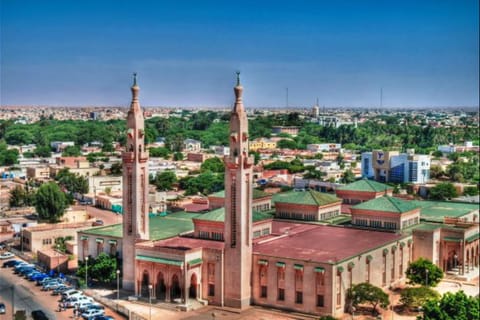
Nouakchott Capital Exploration and Port de Peche
Nouakchott's Port de Peche is the city's most arresting spectacle. Hundreds of brightly painted wooden pirogues hauled onto the beach by crews of fishermen. The catch sorted and sold in a scene of organized chaos that smells powerfully of brine, diesel, and fresh fish scales. In August the humidity wraps the whole waterfront in a haze that makes the boat colors bleed slightly, like a painting left in the rain. The fish market behind the landing beach sells the morning haul directly. The grilled fish stalls nearby serve whole poisson grille with onion-and-lemon relish that is as good as anything along the West African coast. Beyond the port, the Marche Capitale sprawls through covered alleys where fabric merchants stack wax-print bolts to the ceiling. The smell of incense and leather competes with roasting peanuts. The National Museum, reopened and expanded, contextualizes everything you have seen with archaeological finds from the Saharan Neolithic. Start early, before nine, when the port is at its most frenetic and the heat has not yet settled in.
Booking Tip: Half-day guided capital tours are the most practical way to navigate Nouakchott if you do not speak Hassaniya Arabic or French. Book a day or two ahead through your accommodation or a local operator. Walking the port area without a guide is manageable. A knowledgeable local adds layers of context you would otherwise miss entirely. See current Nouakchott tour options in the booking section below.
Terjit Oasis Day Trips and Overnight Stays
Terjit sits in a narrow canyon in the Adrar where a permanent spring feeds pools of clear, cool water beneath date palms and rock overhangs. In August, when the surrounding plateau radiates heat like an oven door, slipping into the spring-fed water at Terjit is one of those physical sensations you remember years later. The contrast between the hot stone under your feet and the startlingly cold water is almost electric. The oasis is small enough to walk end to end in twenty minutes but rich enough in shade and birdsong to hold you for hours. The canyon walls are streaked with mineral deposits in rust and cream, and the light filtering through the palms shifts from gold to green depending on the time of day. August rains, when they come, can briefly swell the spring and make the canyon echo with running water. A basic campement near the oasis entrance offers overnight stays. Sleeping under the stars with the sound of the spring is an experience that the Adrar's cooler-month visitors often skip in favor of more ambitious itineraries.
Booking Tip: Terjit is typically included as a stop on multi-day Adrar tours rather than booked independently. If arranging a standalone day trip from Atar, about 1.5 hours by 4x4, confirm with your driver that the access track is passable after recent rain. Bring your own water and food. The campement at Terjit is minimal. Current Adrar tour packages that include Terjit appear in the booking section below.
Iron Ore Train Ride from Nouadhibou
The iron ore train from Nouadhibou to Zouerat stretches roughly 2.5 km (1.6 miles) long and ranks among the longest trains on earth. It hauls raw iron ore from the mines in the interior to the Atlantic port. Riding it, whether in the single passenger car or atop the open ore wagons as many adventurous travelers do, is an eighteen-hour crossing of the western Sahara that feels otherworldly. The desert at night from the top of an ore car is a dome of stars undiluted by any light pollution. The rhythmic clank of the wagons becomes a kind of meditation. August adds warmth to the nighttime crossing, which in cooler months can be bitterly cold atop the open cars. This makes it arguably the most comfortable time of year for this particular brand of discomfort. The train leaves when it leaves. Schedules are approximate. The whole enterprise operates on a logic that rewards patience and a sense of humor. Nouadhibou itself is a raw port town with a famous ship graveyard in its bay, though the wrecks have diminished in recent years.
Booking Tip: There is no formal booking system for the passenger car. You show up at the Nouadhibou station, typically in the late afternoon, and negotiate a seat. Guided arrangements through Nouadhibou-based operators handle the logistics and ensure you have provisions for the eighteen-hour journey. Bring a headlamp, a turban or scarf against the ore dust, and enough water for a full day. The booking section below lists Nouadhibou-area tours that may include this experience.
Where to Stay in Mauritania in August
Hand-picked hotels across price tiers for August travellers.
Packing Checklist
Bookmark this page — your progress is saved between visits
Need the full list with shopping links?
Climate-specific gear, brand recommendations, and what to leave at home.
View Mauritania Packing List →Essential Tips
Insider knowledge and common pitfalls to avoid
Insider Knowledge
The ataya tea ceremony is the social currency of Mauritania, and refusing it is roughly equivalent to refusing a handshake. Three rounds are served: the first bitter as death, the second mild as life, the third sweet as love, as the local saying goes. Each round takes fifteen to twenty minutes to brew on a small charcoal burner. If you are in a hurry, you are in the wrong country. Sit, drink, and let the conversation find its own pace. More doors open through tea than through any guidebook recommendation.
August nights in Nouakchott come alive after ten when the heat finally loosens its grip. Families spread mats on the sand outside their homes, and the grilled-meat vendors along the Route de l'Esperance fire up their charcoal. The lamb mechoui, slow-roasted whole and pulled apart by hand, is the dish that defines Mauritanian gathering. Eating it cross-legged on a mat with strangers who became hosts five minutes ago is a more honest picture of Mauritanian nightlife than anything a bar could offer, because Mauritania effectively has no bars. This is a dry country in every sense.
Changing money at the official bank rate in Nouakchott is straightforward but slow. The parallel market rate, widely used and openly conducted near the Marche Capitale, tends to be more favorable. Ask your hotel or guide for current rates before exchanging, and count carefully. Carry small denominations of euros or US dollars. Worn or torn bills are routinely refused. Credit cards are accepted almost nowhere outside a few Nouakchott hotels. Bring cash.
Security in Mauritania has improved markedly in recent years. But the improvement is geographically uneven. The corridor from Nouakchott north through Atar and east to Ouadane is well-traveled and generally safe with a reputable guide. The border regions with Mali and the far southeast remain dangerous and subject to government travel restrictions. Do not freelance your own route into areas your guide advises against. The embassy registration process is worth the ten minutes it takes. Register.
Avoid These Mistakes
Underestimating how much water you need. The 76% humidity in Nouakchott disguises dehydration because you do not feel as dry as you would in the Saharan interior. But you are sweating constantly. Three to four liters per day is the minimum in August, more if you are active outdoors. By the time you feel thirsty, you are already behind. Drink more.
Trying to cover too much ground in too few days. Mauritania's distances are enormous and its roads outside the main paved arteries are slow, rough, and subject to August rain closures. The drive from Nouakchott to Atar alone takes six to eight hours on tarmac. Travelers who attempt to squeeze Chinguetti, Banc d'Arguin, and Nouadhibou into a single week spend most of it in a vehicle and arrive at each place too exhausted and rushed to absorb it. Pick one region and go deep. Slow down.
Photographing people without asking permission first. Mauritania is a conservative society, and many people, women, object strongly to being photographed. The fishermen at Port de Peche and the market vendors at Marche Capitale are generally relaxed about cameras. But in smaller towns and oasis camps the expectation is that you ask, and you accept a refusal gracefully. Pulling out a phone camera without a word is a reliable way to sour an otherwise warm welcome. Always ask.
Ready to plan your trip to Mauritania?
Now that you've got the research covered, here's where to go next.
Book Experiences in Mauritania
Top-rated things to do in Mauritania this August
Explore More Activities in Mauritania
Didn't see anything interesting yet?
Browse Viator's full catalog of tours, day trips, food experiences, and private guides in Mauritania.
See All Mauritania Tours on Viator